
New Puppy First Days Essential Tips for a Happy Home and Smooth Start

The first few days with a new puppy can feel like a mix of joy, noise, tiny paws, sharp teeth, and very little sleep. One minute your puppy is curled up like an angel. The next, they are chewing a shoelace, peeing near the back door, or crying because the house suddenly feels too quiet.
That is normal.
A puppy is not arriving as a fully trained pet. They are a baby animal learning a new home, new people, new rules, and a new routine all at once. The goal in the first days is not perfection. The goal is safety, trust, and a simple rhythm your puppy can start to understand.
With a little planning and a lot of patience, the first week can become the start of a calm, happy life together.
Prepare your home before your puppy arrives
Puppies explore with their noses and mouths. If something is within reach, they may lick it, chew it, drag it, or try to swallow it. Preparing your home is less about making everything perfect and more about lowering the chances of trouble.
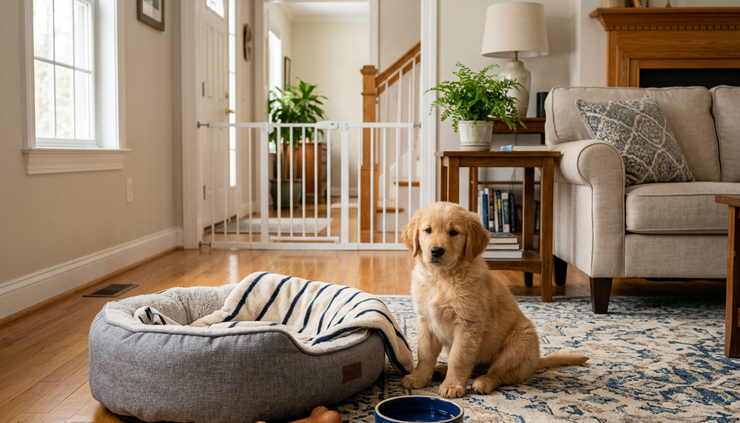
Start with one main puppy area. This might be part of the kitchen, a corner of the living room, or a laundry room with safe flooring. Use baby gates or a playpen to limit access at first. Too much freedom too soon often leads to accidents, chewing, and overwhelm.
A good starter area includes:
A crate or cozy bed for rest
Food and water bowls
A few safe chew toys
Puppy pads if you plan to use them
Easy access to the potty area
Flooring that is simple to clean
Walk through your home from a puppy’s point of view. Look low. Move electrical cords, shoes, children’s toys, houseplants, cleaning supplies, loose socks, and anything small enough to swallow. Secure trash cans and keep bags, medicine, and human food out of reach.
Some common household items can be dangerous for dogs, including chocolate, grapes, raisins, onions, certain plants, and many medications. If you are unsure whether something is safe, ask your veterinarian or keep it away from your puppy.
Choose your supplies before pickup day so you are not rushing while holding a confused puppy. Helpful basics include:
Puppy food that matches what they have been eating
A leash and collar or harness
Identification tag
Crate or playpen
Enzyme cleaner for accidents
Poop bags
Soft brush or grooming tool
Puppy-safe chew toys
A blanket or towel for comfort
If possible, bring home a blanket or toy that smells like the puppy’s littermates or previous environment. Familiar scent can help during the first nights.
Keep the first day quiet. It is tempting to invite friends and family over right away, but your puppy needs time to take in the new space. Let them sniff, rest, eat, and go potty without a crowd hovering around them.
Set a routine your puppy can predict
Puppies do best when the day has a pattern. A routine helps them learn when food appears, where potty happens, when play begins, and when it is time to rest.
You do not need a strict minute-by-minute schedule. You need a steady flow.
A simple puppy day usually cycles through:
Wake up
Potty break
Food and water
Potty break again
Play or short training
Nap
Repeat
Young puppies have small bladders and little self-control. Take your puppy out often, especially after waking, eating, drinking, playing, and sniffing around. These are prime potty moments.
Feeding should be calm and consistent
Feed your puppy the same food they were eating before coming home, at least at first. A sudden food change can upset their stomach. If you want to switch foods, do it slowly over several days and follow your veterinarian’s advice.
Most puppies eat several small meals per day, based on age, size, and your vet’s recommendation. Pick a quiet feeding spot and stay consistent. This helps your puppy feel secure and can make potty timing more predictable.
Leave fresh water available during the day. Some owners pick up water shortly before bedtime to reduce overnight accidents, but do not restrict water in a way that could be unsafe. Ask your vet if you have concerns.
Potty training works best with timing and praise
Potty training takes repetition. Your puppy is learning both where to go and how to let you know they need help.
Take them to the same potty spot each time. Use a simple cue such as “go potty.” When they finish, praise them right away. A small treat can help, but the timing matters. Reward while they still connect the action with the reward.
If your puppy has an accident indoors, stay calm. Do not yell, rub their nose in it, or scare them. Puppies do not understand punishment after the fact. Clean the spot with an enzyme cleaner so the smell does not invite a repeat visit.
Watch for signs that your puppy needs to go:
Circling
Sniffing the floor
Whining
Suddenly wandering away
Scratching near a door
Squatting
When in doubt, take them outside. The more chances your puppy has to succeed, the faster they learn.

Balance play, training, and sleep
Puppies have bursts of energy, then they crash. Many behavior problems in the first days come from being overtired, overstimulated, or unsure what to do next.
Short play sessions are better than long, wild ones. A few minutes of tug, fetch, sniffing games, or gentle toy play can be plenty. Stop before your puppy becomes frantic.
Training can start right away, but keep it simple. Teach your puppy that good things happen when they respond to you. Practice their name, coming when called, sitting for a treat, and accepting gentle handling.
A few helpful first-week lessons include:
Responding to their name
Following a treat lure
Sitting before meals
Trading a toy for a treat
Relaxing in the crate or playpen
Accepting touch on paws, ears, and collar
Keep sessions short, often only a few minutes. End while your puppy is still interested.
Sleep matters more than many new owners expect. Puppies need a lot of rest, and they may not choose it on their own. If your puppy starts biting harder, zooming wildly, barking more, or ignoring everything, they may need a nap.
Give them a quiet place to settle. A crate, pen, or small puppy area can help them learn that downtime is part of the day.
Make the first nights easier
Nighttime can be the hardest part of the first few days. Your puppy has likely left their littermates and familiar sounds. Crying does not mean they are trying to be difficult. It often means they feel alone.
Place the crate near your bed at first if possible. Your smell and breathing can comfort them. You can gradually move the crate later if you prefer another sleeping spot.
Before bed, give your puppy a final potty break. Keep nighttime potty trips boring. No play, no excitement, no bright lights if you can avoid it. Take them out, let them go, praise gently, and return to bed.
A safe chew or soft blanket may help. Some puppies also settle with soft background noise. Make sure anything placed in the crate is safe for your puppy’s age and chewing habits.
Help your puppy meet the world slowly
Socialization does not mean letting every person and dog rush up to your puppy. It means helping your puppy experience the world in safe, positive ways.
During the first days, focus on gentle exposure. Let your puppy hear normal household sounds, see different rooms, meet family members calmly, and explore safe spaces at their own pace.
Good early experiences can include:
Hearing the vacuum from another room
Watching people walk by from a safe distance
Meeting one calm visitor
Walking on different safe surfaces
Riding briefly in the car
Hearing doorbells, dishwashers, and traffic sounds at low intensity
Pair new experiences with treats, praise, or play. If your puppy backs away, freezes, hides, or refuses food, the situation may be too much. Create more distance and try again later.
Before allowing contact with unknown dogs or busy public places, talk with your veterinarian about vaccinations and local disease risk. Safe socialization matters, but so does health.
Calm exposure beats forced interaction. A puppy who watches something new from a comfortable distance is still learning.

Expect common challenges and handle them kindly
Almost every new puppy owner wonders, at some point, “Am I doing this right?” Most puppy challenges are normal. The key is to respond with patience and consistency instead of panic.
Biting and chewing are normal but need direction
Puppies bite during play, teething, and exploration. Their teeth are sharp, but the behavior is not mean.
Keep chew toys nearby. When your puppy mouths your hand, offer a toy instead. If they keep biting hard, calmly pause the play and give them a chance to settle.
Avoid rough hand games if they make your puppy more mouthy. Use toys as the target for tug and chasing.
Accidents will happen
Even with a good schedule, your puppy will make mistakes. Clean accidents thoroughly and adjust your routine. More supervision, more potty trips, and less freedom usually solve many early problems.
If accidents are frequent, painful, or unusual, check with your veterinarian to rule out a health issue.
Crying and barking need calm responses
A puppy may cry in the crate, bark for attention, or whine when they cannot reach you. First, make sure basic needs are met. Do they need to potty? Are they hungry? Are they scared? Are they overtired?
If their needs are covered, avoid turning every noise into a big event. Wait for a quiet moment, then calmly reward or release them. This teaches that calm behavior works.
Chewing furniture and stealing items mean management is needed
Puppies are fast. If they keep grabbing socks, shoes, or remote controls, the environment needs changes.
Put tempting items away. Block access to unsafe areas. Offer legal chewing options. Praise your puppy when they choose the right item.
Management is not cheating. It is how small puppies learn without constant correction.
Overexcitement means your puppy needs help settling
Some puppies get wild in the evening. They race, nip, bark, and seem unable to stop. This often means they are tired.
Try a potty break, then a quiet chew in the crate or pen. Lower the lights. Reduce noise. Stay boring. Puppies learn calm through practice.
Build trust through patience and bonding
The first days are not just about training. They are about forming a relationship.
Your puppy is learning whether people are safe, whether the home is predictable, and whether their needs will be met. Every gentle routine, every calm potty trip, and every kind correction adds to that trust.
Bonding does not require constant attention. In fact, puppies need to learn that being near you can be calm. Sit on the floor while they chew a toy. Hand-feed part of a meal. Practice one easy cue. Stroke them gently if they enjoy it. Stop if they move away.
Learn your puppy’s body language. A loose, wiggly body usually means comfort. Tucked tails, yawning, lip licking, hiding, and turning away can mean stress. Respect these signals. Giving your puppy space can build more trust than pushing for affection.
Use a warm voice. Celebrate small wins. The first time your puppy goes potty outside, settles in the crate, responds to their name, or chooses a toy instead of your sleeve, mark it as progress.
A smooth start does not mean every day feels easy. It means there is a steady pattern your puppy can count on.

A simple first-week checklist
The first week can feel full, so keep your priorities clear. Focus on the basics before worrying about advanced commands or perfect manners.
Use this checklist as a guide:
Set up a safe puppy area
Keep meals on a steady schedule
Take potty trips often
Reward outdoor potty right away
Begin crate or pen time gently
Offer safe chew toys every day
Keep play short and positive
Introduce new sounds and people slowly
Schedule a veterinary visit if you have not already
Give your puppy plenty of sleep
The first days with a new puppy are a transition for everyone in the home. There will be accidents, missed sleep, and moments when the plan falls apart. That does not mean you are failing. It means you are raising a young dog.
Keep the home safe, the routine simple, and the tone kind. Your puppy does not need perfect owners. They need patient people who will guide them, protect them, and show them how to belong.


Comments